
From biogenic carbon dioxide to fossil-free gas
Swedish industry uses large amounts of gas, particularly in the chemical and manufacturing sectors. Today, a significant share of this gas is imported via pipeline from Denmark and still largely consists of fossil natural gas.
To reduce emissions and strengthen energy security, Sweden needs to increase domestic production of fossil-free gas. One project that could contribute to this transition is currently being developed on the Värö Peninsula in Varberg on the Swedish west coast.
The plan is to build a facility that will produce so-called e-NG (Electric Natural Gas), a synthetic gas that can replace fossil natural gas in existing infrastructure.
A new pathway to fossil-free gas
The project is being developed by OX2 together with the forest industry group Södra and technology developer TES.
The ambition is to produce up to 1.2 TWh of e-NG per year by combining two resources already available in the area:
- Biogenic carbon dioxide from Södras pulp mill in Värö
- Hydrogen produced on site using renewable electricity
When these two components are combined, they form a synthetic gas that is chemically equivalent to natural gas, but without fossil emissions.
Because e-NG functions within the same system as natural gas, it can be used directly in today’s gas grid and industrial processes without requiring new infrastructure.

Södra’s pulp mill in Värö. During the production of pulp, biogenic carbon dioxide (CO₂ from biological sources) is generated as a natural by-product. Photo: Per Pixel
Significant potential for Sweden’s gas supply
If realised, the project could have a substantial impact on Sweden’s energy system. Annual production of 1.2 TWh of e-NG would:
- represent more than a fourfold increase in domestic production of fossil-free gas in the west coast gas grid
- reduce dependence on imported fossil natural gas
It would also help strengthen energy resilience and competitiveness for Swedish industries that rely on gas in their processes.
From forest industry to energy resource
An important part of the project is its connection to Södras pulp mill in Värö. During the production of pulp, biogenic carbon dioxide is generated as a natural by-product.
By capturing this carbon dioxide and using it in the production of e-NG, it can instead become a valuable feedstock in a new energy system.
This creates an example of how different industries can be integrated into future circular energy solutions.
Next steps in the project development
The project is currently in the pre-FEED (early development) phase, which runs for one year. During this phase, the partners will:
- develop the technical design of the facility
- assess how the production can be integrated with Södras existing industrial operations
- secure connections to electricity and gas networks
- advance permitting processes and develop commercial agreements
The pre-FEED phase is partly supported by funding from the Industrial Leap (Industriklivet), the Swedish Energy Agency’s programme for industrial decarbonisation which is part of the EU Recovery and Resilience Facility (RRF) and Next Generation EU.
If the project proceeds to investment and construction, the facility could be commissioned in the early 2030s.
Facts: What is e-NG?
Electric Natural Gas (e-NG) is a synthetic gas produced by combining hydrogen with captured carbon dioxide.
The gas is chemically identical to fossil natural gas, meaning it can be used in existing gas networks and industries without technical modifications.
Potential applications include:
- fuel for the shipping industry
- feedstock for the chemical industry
- industrial processes

A collaboration across the value chain
The project brings together expertise from different parts of the energy system:
Södra contributes biogenic carbon dioxide from its pulp production
OX2 develops wind power in the region and contributes renewable electricity for hydrogen production
TES provides technology and experience from international e-NG projects
Together, the partners are developing a solution that can support industrial decarbonisation, lower emissions and increased energy self-sufficiency in Sweden.


Published 2026-03-09
Explore more OX2 Insights
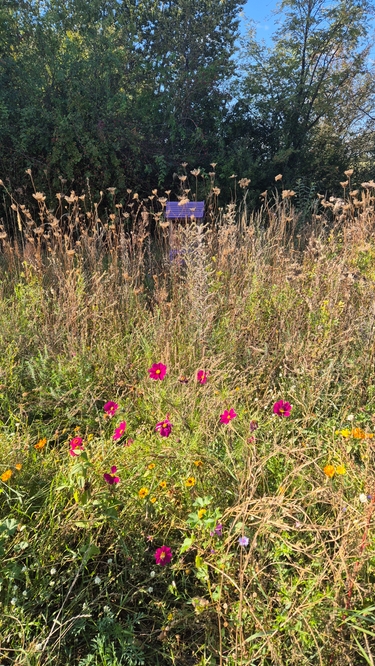
How a wind farm can support biodiversity and the local community
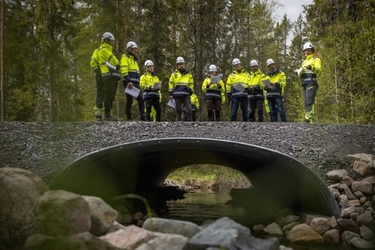
Efforts to reverse biodiversity loss and increase climate resilience have led to OX2 focusing on practical action across multiple project sites: reviewing the location, dimension and design of culverts.
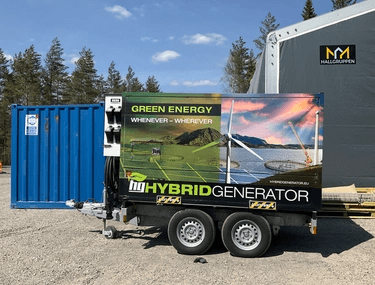
The greenhouse gas emissions from our projects mainly come from materials, land use, and construction activities. Technological advancements in the industry enables a reduction of our climate impact. OX2 welcomes these technological advancements and hope that best practice in short will be common practice.