
OX2, the Soil Carbon Bank partner for climate and biodiversity
OX2 in Poland as a partner of the Soil Carbon Bank project, explores how different management methods impact the carbon sequestration of the area by capturing carbon dioxide from the atmosphere and retaining it in the soil.
The project is being conducted by the Kwietna Foundation. OX2, together with the partner has been working with since 2023. The projects is planned for 3 years (2025-2028) and the assumption is to use soil samples to study the carbon sequestration rate. The ambition is that the outcome of the study can inform biodiversity efforts in OX2’s renewable energy projects, benefiting both climate and biodiversity.
Our actions and results 2025
OX2 adopted a hectare of agricultural land in Nieborów. Over the next 3 years, the agricultural land will be transformed into biodiverse meadows, which fulfil an important role in the process of CO₂ sequestration.
In 2025 at the beginning of spring, at the turn of March and April, agricultural works began as part of the Soil Carbon Bank project. The experimental plots were established and sown in May. We used seeds collected in the previous year, from nature, by volunteers – also from OX2. The list for sowing includes local plant species, according to their soil and moisture preferences – our field is sown with dry-loving species.

Scientific research
In May and June, we collected over a hundred soil samples from the 30 plots. The analyses were carried out by two Regional Chemical and Agricultural Stations – in Łódź and Gdańsk. The results determine the so-called zero state, i.e. the reference point from which we begin our long-term monitoring. As we expected, the tested soils were found to be very light, acidic sands, poor in nutrients. Although at first glance this may sound like a disadvantage, in fact it is a huge advantage for our project. Low fertility will limit the growth of dominant grasses and open up space for greater plant diversity. Equally important, the entire area proved to be exceptionally homogeneous in terms of soil parameters, which gives us a solid basis for reliable comparisons in the coming years.
Today, the soil stores about 23 tonnes of organic carbon per hectare. Forecasts show that this value may increase by an additional 7.5–15 tonnes within five years. This means removing 27 to 55 tonnes of carbon dioxide per hectare from the atmosphere. This simple calculation shows that the Soil Carbon Bank is not just a scientific experiment, but a real climate tool.
At the same time, the Soil Research Club of the Wrocław University of Environmental and Life Sciences, is conducting its own observations. A soil profile analysis is being prepared. Also tests of the mown grass samples are being performed by the Institute of Plant Breeding and Acclimatisation
The coming months and years will bring the first evidence of how effectively soil can store carbon when we give it back to nature.
OX2 volunteers
As in the previous year, volunteers from OX2 spent a day working on our meadow. We removed invasive plants, collected seeds, mowed the grass, built a pen for goats and prepared a pasture for sheep.
Flower meadows are rich ecosystems, which are the habitat of many species of local flora and fauna. They have also great importance for water retention and are crucial for water accumulation during drought. As a part of the Soil Carbon Bank project, we will create a space where the atmospheric CO₂ will be permanently bound in the soil, and nature will gain a new, valuable habitat.
Our learnings from the Soil Carbon Project can be applied to the renewable energy projects we develop on similar land, where we have the opportunity to scale the effects of our initiatives both in terms of carbon sequestration and biodiversity.
Explore more OX2 Insights
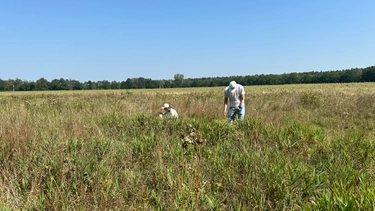
In connection with the development of renewable energy projects, OX2 is exploring methods to enhance biodiversity and carbon sequestration.
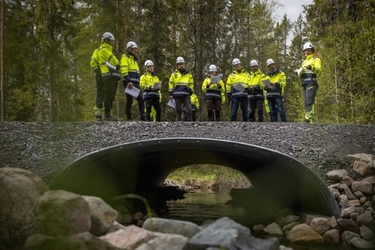
Efforts to reverse biodiversity loss and increase climate resilience have led to OX2 focusing on practical action across multiple project sites: reviewing the location, dimension and design of culverts.
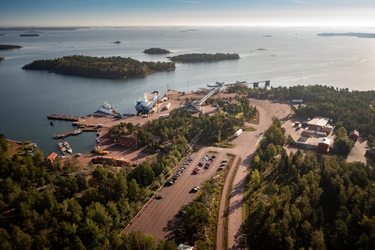
Electricity generated from renewable sources can be used to produce other energy carriers. This conversion is collectively referred to as Power-to-X, where X represents the range of possible end products, such as renewable hydrogen and e-fuels.