
Creating new nesting sites for Finland’s golden eagle
By constructing artificial nests, OX2 is helping safeguard one of Finland’s most iconic birds of prey while developing new wind power in Halsua.
The golden eagle is one of Finland’s largest and most sensitive birds of prey. In Central Ostrobothnia, where only a handful of pairs exist, every successful nesting season matters and conservation efforts seem to have been a contributing factor for the population growth.
As part of the development of two wind farms in the municipality of Halsua, OX2 has now built new artificial nests to support the endangered species and reduce potential impacts from construction.
Supporting an endangered species alongside wind power development
OX2 has built two artificial nests for golden eagles in Halsua as part of mitigation measures linked to the Honkakangas and Kannisto wind farms. Together, the two wind farms will comprise a total of 36 wind turbines.
The purpose of the artificial nests is to ensure that golden eagles have access to suitable, undisturbed nesting sites located at a safe distance from wind turbines. Golden eagles are highly territorial and sensitive to disturbance, especially during the breeding season, and may abandon nesting if conditions are not right.
In Central Ostrobothnia, only around five golden eagle pairs currently nest, producing an estimated four to six chicks per year. At a national level, the species’ conservation status is "vulnerable" , making local conservation measures particularly important.
Artificial nests that mimic nature
The nests have been built by experienced bird expert Jukka Ylikarjula, who has extensive knowledge of golden eagle behaviour and nesting requirements.
“The majority of golden eagle nests in this region are artificial,” says Ylikarjula. “If a nest is placed in a quiet location and built in suitable trees, the birds will readily accept it.”
The newly constructed nests have been assembled using natural materials and supporting structures designed to resemble natural nests as closely as possible. Their condition and use will be monitored regularly by either GPS and/or visual field monitoring to ensure they remain suitable over time.
There were already several nests in the broader area around Halsua, but the two new nests have been placed further away from the planned wind farms to reduce the likelihood of disturbance.
"It's been a long journey, but now the nests are ready and waiting for their inhabitants.”
Heli Harjula, Project Manager at OX2

Built on years of environmental assessment
The construction of the artificial nests is based on extensive studies carried out as part of the environmental impact assessment (EIA) and zoning processes for the Halsua wind power projects. These assessments examined, among other factors, how the projects could affect golden eagle territories.
The mitigation measures were proposed by the coordinating authority, and their implementation has required long-term planning and cooperation.
“Discussions about the location and implementation of the nests began with landowners back in 2022,” says Heli Harjula, Project Manager at OX2. “It's been a long journey, but now the nests are ready and waiting for their inhabitants.”
Long-term coexistence between renewable energy and biodiversity
The Honkakangas wind farm is expected to be completed in 2027, while the Kannisto wind farm is scheduled for completion in 2028. For OX2, the artificial nests are part of a broader ambition to ensure that renewable energy development can coexist with local ecosystems and protected species.
By creating safe nesting alternatives in advance, OX2 aims to support the long-term survival of the golden eagle population in the area while continuing to contribute to Finland’s transition to renewable energy.
Why it matters
This project is not about relocating golden eagles, but about respecting a species that plans its life decades in advance. Golden eagles are highly loyal to their territories, and successful coexistence requires long-term thinking.
Artificial nests only work if the birds choose to use them. That is why careful site selection, expert involvement and patience are essential parts of the process. The ideal scenario is to provide several attractive, undisturbed nesting alternatives well before potential disturbance occurs.
As wind farms are long-term investments, it is crucial that the transition to renewable energy does not come at the expense of the species that already inhabit these landscapes. Planning for coexistence is a responsibility that extends across the full lifetime of a project.

Published 2026-04-28
Explore more OX2 Insights
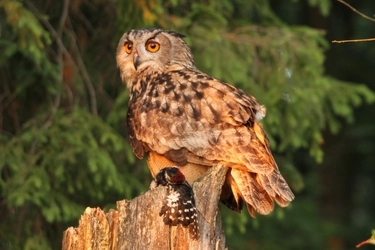
In connection with the development and construction of the Kraśnik Wind Farm in Lubelskie, Poland, OX2 has taken the initiative to protect Europe’s largest owl, the bubo bubo.
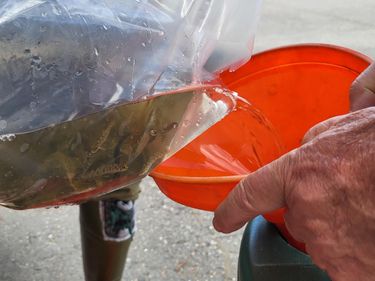
In connection with OX2’s construction of the Niinimäki wind farm in Pieksämäki municipality in Finland, OX2 have together with partners taken the initiative to increase biodiversity by restoring the streams where the endangered brown lake trout live.
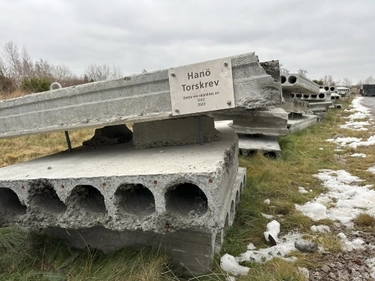
In connection with the offshore windfarms that OX2 is developing, artificial reefs are planned to benefit cod, an endangered and important predatory fish for the Baltic Sea.